
Committee Officers
The Nuclear and Future Flight Propulsion Technical Committee (NFFPTC) is a part of the Propulsion and Energy Group of comittees of the American Institute of Aeronautics and Astronautics (AIAA)
| Role | Name | Contact |
| Chair | Greg Meholic | https://www.linkedin.com/in/greg-meholic-6354a911/ |
| Vice Chair | Jim Gilland | https://www.linkedin.com/in/james-gilland-27634113/ |
| Chair Emeritus | Jim Cavera | https://www.linkedin.com/in/jim-cavera-3840a9113/ |
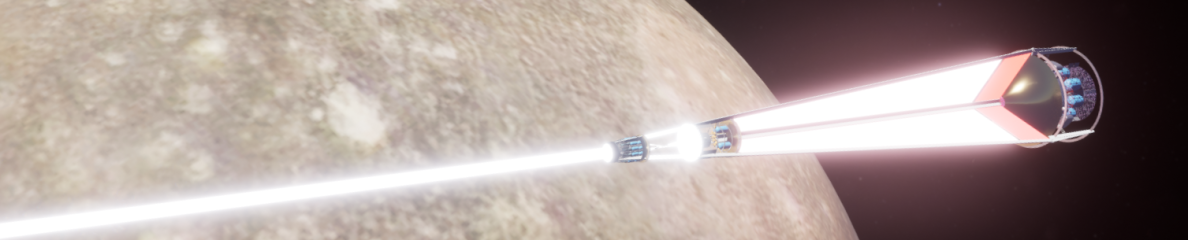
The purpose of this committee is to conduct activities toward the understanding of physical mechanisms and associated technologies that lead to the implementation and design of nonchemical, high energy propulsion systems other than electric thruster systems. Propulsion systems included are: nuclear thermal, gas core, fusion, antimatter, beamed energy, solar sails, tethers, and electromagnetic launchers.
AIAA members can apply to join our committee through the AIAA website. This application is only open during the fall.
Committee members can see a directory of other committee members after logging into the AIAA website, under “My AIAA”! Look for “My Committees”
Nuclear and Future Flight Propulsion Technical Committee
Charter
| Version | Revision date | Revisions Made by |
| Ver 1 | 04 01 2026 | G. Meholic, J. Gilland, E. Davis, W. Hammond |
| Ver 2 | 09 05 2026 | R. Powell (AIAA) |
- Committee Name
Nuclear and Future Flight Propulsion Technical Committee (NFFPTC)
- Scope
The primary purpose of the AIAA Nuclear and Future Flight Propulsion Technical Committee (NFFPTC), hereafter referred to as the “Committee”, is to conduct activities towards the promotion, assessment, and understanding of the physical mechanisms, testing capabilities, and associated technologies leading to advanced space propulsion concepts that might offer superior performance over present systems. Propulsion systems of interest by the Committee include nuclear thermal, nuclear fusion, antimatter-based concepts, beamed energy, space sails, and concepts based on breakthrough propulsion physics (e.g., quantum systems, elementary particle and gravitational physics, advanced electromagnetics, etc.). Topics related to these such as space power systems, electric propulsion, and alternative launch concepts, to name a few, are outside the scope of this Committee and may have other AIAA technical committees dedicated to those subjects.
The NFFPTC will also act as an open forum regarding the status of emerging technology needs for nuclear and future flight propulsion applications. Its objectives are:
- To build and maintain an active, continuous membership as knowledgeable representatives of the advanced propulsion community.
- To coordinate with the appropriate organizations and agencies on future technical maturation approaches, applications and potential mission needs for nuclear and future flight propulsion systems.
- To encourage and support technical interchange between the appropriate government agencies, universities and industry contractors to advance nuclear and future flight propulsion technology.
- To encourage, improve and implement a robust educational framework that promotes the importance of nuclear and future flight propulsion to human advancement.
- Governance
The NFFPTC is one of the TCs in the AIAA Propulsion and Energy Group (PEG).
- Roles and Responsibilities
The following are recurring internal projects that are addressed annually with the volunteer assistance of the membership. Special subcommittees within the NFFPTC can be convened as needed at the discretion and direction of the Officers. All members are obligated and encouraged to consider participation.
4.a. Institute Activities
AIAA Conference Coordination: At least one (1) member shall be responsible for coordinating all engagements between the Committee and AIAA regarding the annual SciTech Forum as well as other conferences or events where opportunities arise for NFFPTC participation. Tasks of this role include, but are not limited to:
- Seeking TC members to assist with the tasks associated with conference management. This includes the coordination and assignment of technical session moderators (chairs, co-chairs) from within the membership.
- Ensuring the Committee’s solicitation for technical papers is commensurate with the core technical topics and interests of the NFFPTC and does not detract from or significantly overlap with the solicitation topics of other AIAA Technical Committees.
- Establishing a pool of abstract/paper reviewers from within the membership.
- Coordinating and tracking review progress throughout the manuscript submittal process in accordance with AIAA scoring procedures and deadlines.
- Arranging the accepted papers into technical sessions commensurate with the AIAA SciTech Planning Committee or other AIAA planning committees.
- Engaging with AIAA on conference administrative business that involves participation by the Committee.
- Coordinating room assignments and Committee needs with AIAA to host NFFPTC-sponsored paper sessions, joint sessions with other TCs, and in-person Committee meetings and events (if the latter two are deemed appropriate).
- If appropriate, forming and coordinating Committee-sponsored panel sessions at the conference that promote and highlight the Committee’s expertise, membership and value to the scientific community.
- Coordinating with the NFFPTC technical session moderators to provide “Best Paper” nominations back to AIAA in accordance with conference guidelines and deadlines.
4.b. Administrative Activities
Aerospace America Year In Review Article: A volunteer member shall become the primary point of contact on behalf of the Committee to solicit input and/or coordinate assistance from the members on preparing a Year In Review article to be published by AIAA. That person shall collect inputs, author and edit the article, coordinate with AIAA, and assure all submission deadlines are met.
AIAA Wyld Propulsion Award Recipient Selection: The NFFPTC Chair and one other volunteer Voting member from the Committee shall participate in the AIAA Wyld Propulsion Award selection process. Once a recipient has been selected, the NFFPTC membership shall participate in the affirmation of the recipient according to instructions provided by the NFFPTC Chair.
4.c. Internal Activities
Dr. Robert L. Forward Pioneer Award: In honor of Dr. Robert L. Forward (RLF) and his pioneering contributions to the sciences, technologies, and imaginations associated with the NFFPTC, the RLF Pioneer Award (not tracked by AIAA) is awarded bi-annually to an NFFPTC member who has demonstrated extraordinary and noteworthy accomplishments throughout their career in the technical fields and interests of the Committee. An RLF Pioneer Award Selection subcommittee shall be formed comprised of volunteer members to solicit candidate nominations, establish a scoring/ranking procedure, and communicate the final RLF Pioneer Award recipient to the Officers. The subcommittee will also ensure that the RLF Pioneer Award is prepared and will coordinate with the Officers regarding presentation to the recipient.
- Leadership
Operations of the NFFPTC are governed and coordinated by the Committee Officers of Chair, Vice Chair, Treasurer, and Secretary. Together, they address the administrative aspects of maintaining Committee health; interacting with AIAA on matters relating to Committee operation; ensuring the integrity, status and engagement of the membership; coordinate all activities relevant to TC involvement; and assuring that such activities align within the scope, purpose and objectives of both AIAA and the Committee. The roles and responsibilities of each Officer position are as follows:
- Chair – Coordinates all activities within the Committee as well as manages and collaborates with the functions of the other Officers. Engages with AIAA on TC matters and other organizational roles.
- Vice-Chair – Assists the Chair with Committee business and performs other tasks as appropriate.
- Treasurer – Tracks income, expenses, and financial status of the Committee. Coordinates with AIAA on financial matters related to the Committee.
- Secretary – Captures and archives meeting agendas, attendance, minutes, and actions. Maintains membership roster. Coordinates communication with AIAA, Officers, and membership as needed.
Officers are elected by the membership and hold their positions for a two (2)-year term. Only members in good standing and with voting rights are eligible to hold Officer positions. Candidates for each position can be self-nominated or nominated by any of the membership. In an election year, Officers are elected by majority vote of the Voting membership during the month of May. The newly elected Officers will assume their roles immediately upon election. The outgoing Secretary will inform AIAA of the change in leadership as soon as practical. Officers can serve for up to two (2) consecutive terms.
- Structure
6.a. Conference Subcommittee
This subcommittee is described in Section 4.a.
6.b. Membership Subcommittee
Each year, at least two (2) volunteers from the Voting membership will be designated as NFFPTC representatives to address TC membership topics coordinated through AIAA. This subcommittee will receive and process TC membership applications submitted through the AIAA Portal as well as other means. They will also make an initial eligibility assessment of candidate TC members based on criteria and coordinate with the TC Officers per the process defined Section 7.a.
6.c. Dr. Robert L. Forward Pioneer Award Subcommittee
This subcommittee is described in Section 4.c.
- Membership
NFFPTC membership consists of both domestic and international AIAA members from the advanced propulsion community, with broad representation from industry, civil and government organizations, academic institutions, and research centers. All Committee members must be and remain active AIAA members. The NFFPTC membership shall be limited to fifty (50) total members (per AIAA Technical Committee guidelines) and will fall into the categories defined below:
- Voting – Members who are eligible and obligated to vote on Committee business and decisions if a vote by the general membership is requested. They are also eligible to hold Officer positions.
- Student – Members who have yet to enter the workforce as professionals or who are enrolled in an academic institution full time. Student members are not eligible to vote on Committee business or hold Officer positions but can participate in and contribute to Committee activities. Student members can become Voting members once their academic degree has been conferred.
The NFFPTC will also admit Emeritus members who will not count against the formal TC membership roster. Members qualify for Emeritus status when they have been on the Committee for at least twenty (20) years or have held the Chair position for two (2) terms. Emeritus members are not eligible to vote on Committee business nor hold Officer positions and are not obligated to attend meetings; however, they can participate in and contribute to Committee activities at their discretion. TC members can choose to become Emeritus members if the above requirements are met.
7.a. Qualifications for Membership:
Prospective members must apply for TC membership through the AIAA Portal. Once the candidate’s information has been passed to the Membership Subcommittee, that group will assess the qualifications for membership and coordinate with the Officers, AIAA, and the member candidate. Qualifications for membership include:
- Current AIAA membership
- Relevant work, contribution or career interests in the topics covered by the TC
- Potential to be an active member of the TC
- For those pursuing Student membership, a Letter of Recommendation by a professor or instructor who can attest to the student’s academic performance and interests applicable to the TC.
7.b. Maintaining Membership
To maintain TC membership, members should attend at least 50% of the general membership meetings held throughout the calendar year (January-December). Meeting attendance will be recorded by the Secretary.
An annual survey of the membership will be taken to confirm contact information, membership status, and continuation in the Committee. Members who wish to leave the Committee at any time must provide written notification to the Officers. Upon acknowledgement by the Officers, the member’s active status will be terminated immediately or according to conditions as specified and agreed to by the Officers. The TC membership of any member can be proactively terminated pending a unanimous vote of the Officers.
- Meetings and Voting
The NFFPTC shall hold at least two (2) general membership meetings during the calendar year. These can be either in-person or virtual. General membership meetings can only be led and moderated by an Officer of the TC. The process by which the general membership meetings are conducted is at the discretion of the Officer. Additional meetings of the general membership can be called and coordinated at the discretion of the Officers.
8.a. Voting Process
For subjects that apply to or affect the Committee membership, its operations, or its processes (including Officer elections), the voting process shall be as follows:
- A motion shall be made on the topic and shared with the members attending the discussion.
- The motion must be supported (i.e., ‘seconded’) by another Voting member.
- The Secretary (or acting) will create a record of the motion in the meeting minutes.
- The Chair shall then offer a period of open discussion about the motion that shall last as long as the Chair deems it appropriate. All members are encouraged and permitted to participate. If the motion is postponed, the Secretary shall note this and recall it at the next Committee meeting.
- The Chair shall call for a vote. The Secretary shall tally the votes and record the outcome.
8.b. Voting Conditions
- Only Voting members can make motions, second a motion, and vote. Voting members can make motions on behalf of non-voting members.
- Members can propose to ‘postpone’ a motion without a vote. Following a second to postpone, the Chair shall make a final determination of whether the motion is postponed.
- Members can abstain from voting.
- If a motion is brought to vote during a general membership meeting, the Chair shall call for a vote and the Secretary will record the responses of those present. The Secretary shall then notify the absent TC members of the motion and request their vote, either by voice or electronically, within five (5) days of the notification. A motion will pass with a majority vote of all responses after the five days.
- The Secretary shall document the proceedings regarding all motions.
- Committee Website
- Charter Revision
The Committee Charter should be reviewed every two (2) years as the elected Chair takes office.
The elected Officers of the NFFPTC can choose to amend the objectives and procedures of the TC as outlined in this Charter so long as the AIAA guidelines for Technical Committee operation are followed. This process can be conducted outside of the general membership meetings as coordinated by the Officers. The process shall be as follows:
- Proposed changes shall be drafted and reviewed by the elected Officers.
- The proposed changes shall be presented to the general membership.
- A period determined reasonable by the Officers, but not less than five (5) days, will be allowed for the membership to review and provide comments and input. The Secretary will track comments.
- After the comment period has ended, the Officers will collectively ensure that each comment is dispositioned and, if needed, the text will be amended in accordance with AIAA Technical Committee guidelines.
- The revised text will be presented to the general membership for a final draft review.
- A period determined reasonable by the Officers, but not less than three (3) days, will be allowed for the membership to review the final draft. Issues raised will be handled on a case-by-case basis.
- The final draft will be brought to the general membership for vote to adopt the revised version of the charter, with five (5) days provided for voting. A majority of the votes cast by the Voting membership is required for the changes to take effect. The Secretary will verify and document the membership vote results.
- If the changes are approved, the revised charter/text will take effect immediately, be archived into the TC operating documents, distributed or made accessible to the general membership, and a copy sent to AIAA. If not approved, the current language will remain in effect.

